For picture details
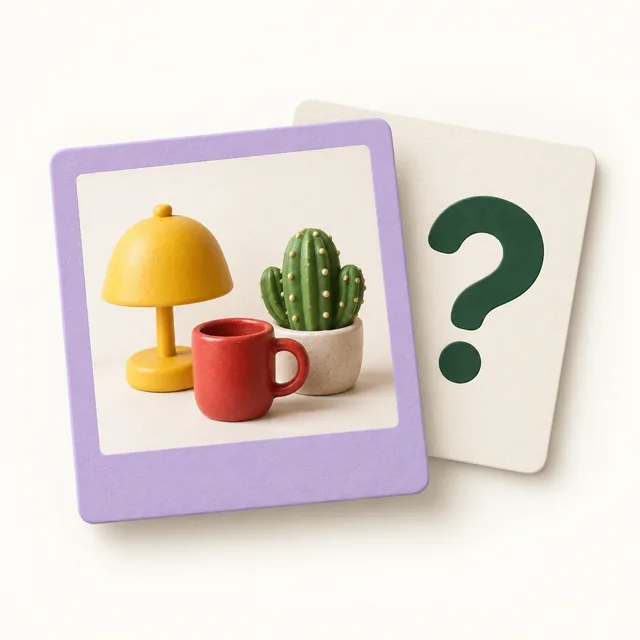
Photographic Memory Test shows original illustrated scenes for ten seconds, then asks about objects, colors and locations. Review the pictures after submitting.
Memory games ask you to hold a small piece of information, then bring it back without a visible prompt. Choose picture details, digits, locations, ordered steps or pairs spread across a board.
Choose a challengeLook closely. Remember the little things.
See it once. Type it exactly.
Watch the path. Repeat the order.
Take in the pattern. Find every square.
Flip, remember, match all eight.
Illustrations preview each game. Select a card to open the playable version and its instructions.
The five games use different material. Choose the one whose rule feels clearest today.
Photographic Memory Test shows original illustrated scenes for ten seconds, then asks about objects, colors and locations. Review the pictures after submitting.
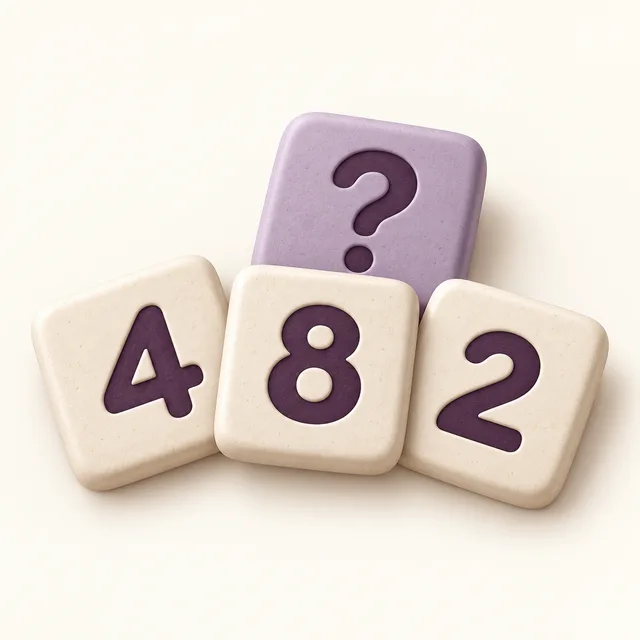
Number Memory gives you one growing string and asks for every digit in the original order. It is the shortest route into typed recall.
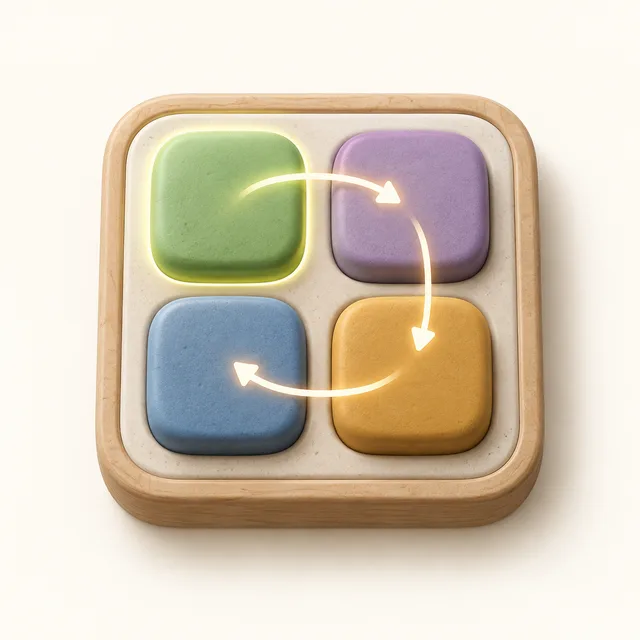
Sequence Memory is about which pad came next. Pick it when order matters more than the name or position of an item.
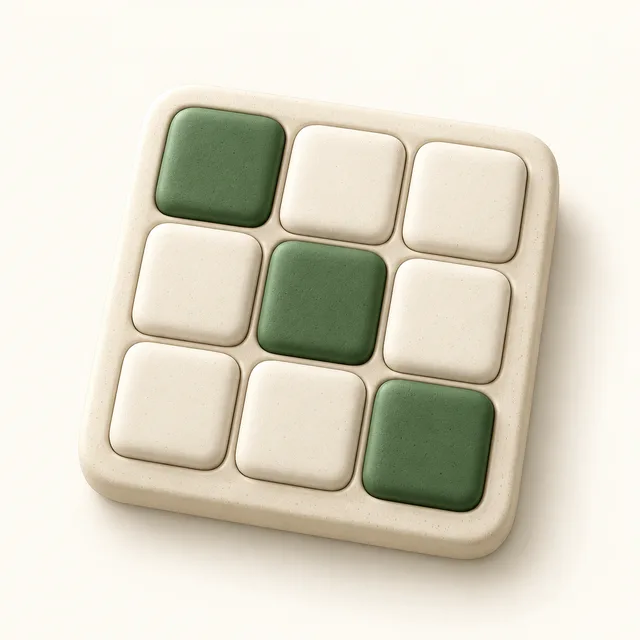
Visual Memory asks for remembered squares in any order, while Memory Match lets information stay on the board across turns.
Start with a single clear item, then move toward a larger board. Stop after any game; this is a suggested order, not a test.
Begin with one short digit string and a direct typed answer.
Add order to the task by repeating a highlighted route.
Switch from sequence to a pattern of locations.
Finish with a full board where each turn can inform the next.
Number Memory has one prompt and one input field, so it is usually the simplest place to begin. Choose a different game if you prefer visual tiles or cards.
No. Each game is a separate round with its own rules and result. A single short game is enough for a break.