For turning shapes and folding cubes
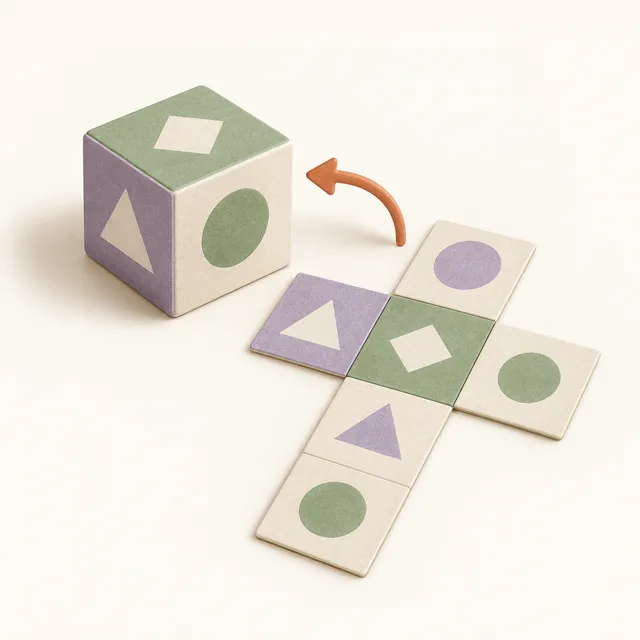
Spatial Reasoning Test gives twelve untimed rotation, mirror and cube-net questions, with clear diagrams and answer explanations.
Seven untimed games cover spatial transformations, number placement, pixel clues, visual rules, tile planning, overlapping switches and secret codes. Each provides feedback and a result tied to its own rules.
Choose a challengeA new angle on a familiar shape.
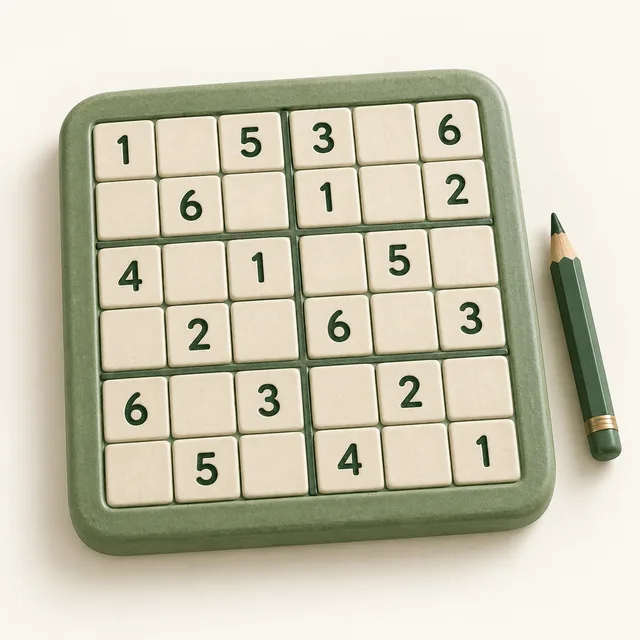
Six digits, one satisfying solution.
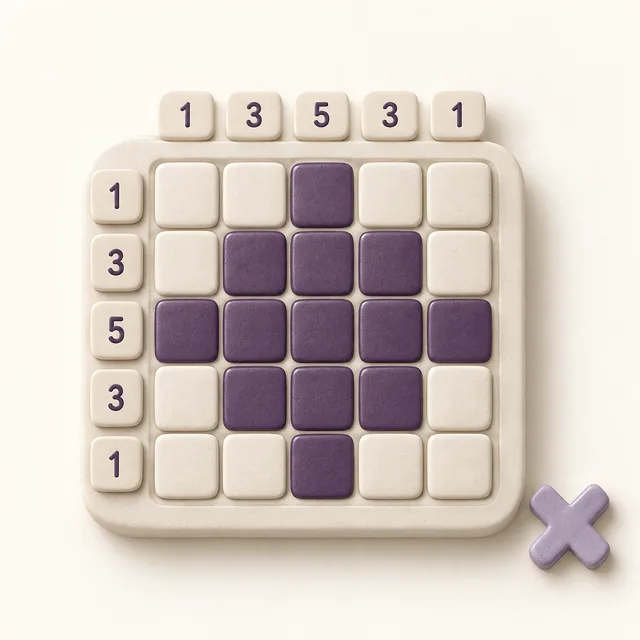
Read the runs. Reveal a pattern.
Find a rule. Fill the gap.
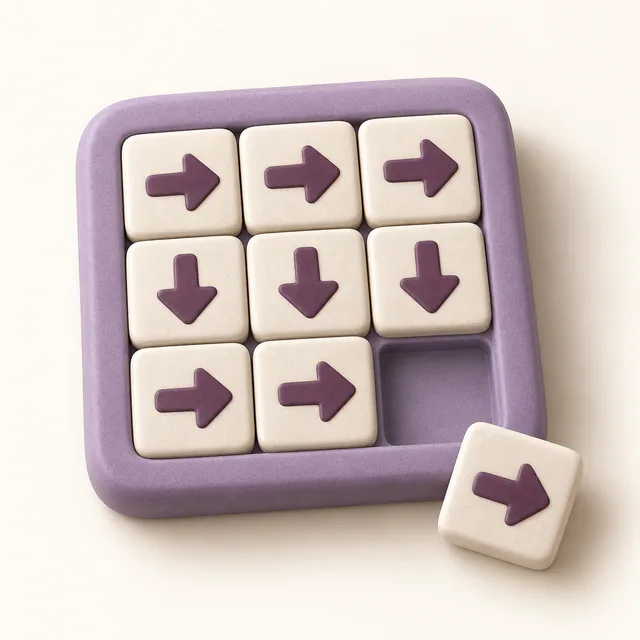
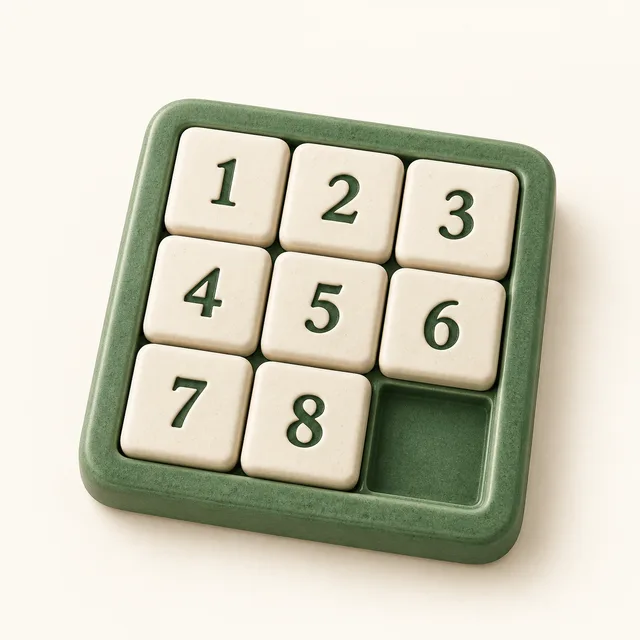
A small board with a satisfying twist.
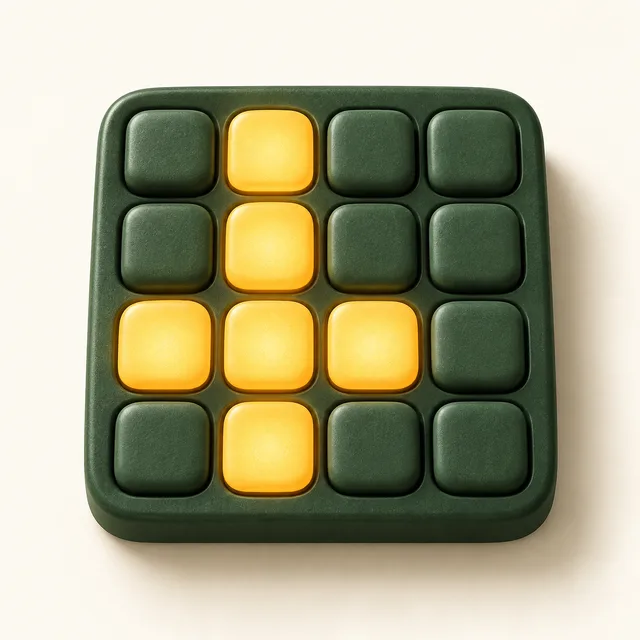
One tap. A little chain reaction.
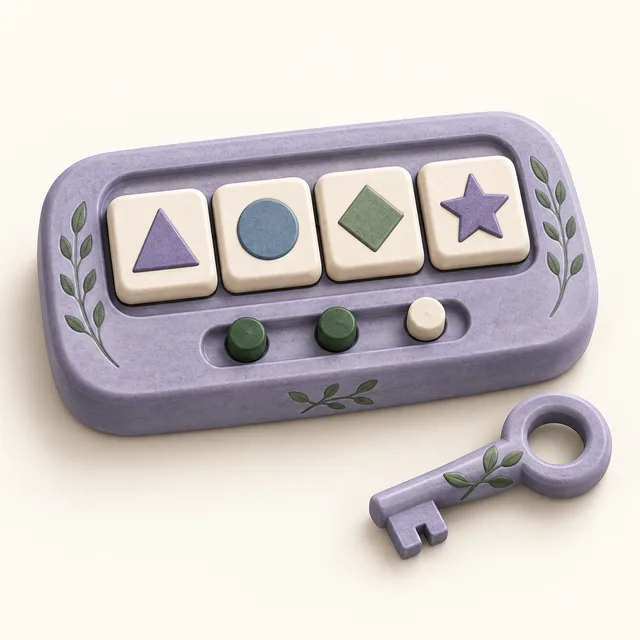
Every guess leaves a clue.
Illustrations preview each game. Select a card to open the playable version and its instructions.
Pick visual questions or a board to work through at your own pace.
Spatial Reasoning Test gives twelve untimed rotation, mirror and cube-net questions, with clear diagrams and answer explanations.
Mini Sudoku places 1–6 in rows, columns and boxes. Nonogram fills an abstract pixel pattern from run clues. Both have unique solutions, daily boards and one-step hints.
Pattern Recognition offers 12 matrices and an explanation after every answer.
Sliding Puzzle moves one tile at a time; Lights Out flips a cross of switches. Both have solvable boards and undo.
Code Breaker gives eight guesses at a four-symbol secret with exact and misplaced counts.
These games use different rules. Try one, or follow this optional route.
Start with a visible matrix and a choice of four answers.
Turn from identifying a rule to planning a sequence of moves.
Use feedback from earlier guesses to investigate a hidden answer.
No. Work at your own pace. Moves, guesses or correct answers determine the result.
No. Move counts, code points and correct answers measure different game tasks. Compare within a game and keep the starting puzzle in mind.